
What Is Personal Injury Law?

Personal injury law is a legal area that helps people seek compensation when they suffer harm due to another person’s negligence or wrongful actions. These cases often involve physical injuries, emotional distress, financial losses, and medical expenses resulting from accidents or unsafe conditions.
The purpose of personal injury law is to ensure that injured individuals can recover damages and receive fair compensation for the losses they experience. Whether the injury occurs in a car accident, a workplace incident, or a slip-and-fall accident, victims may have legal rights that allow them to pursue a claim against the responsible party.
How Personal Injury Law Works
A personal injury case typically begins when an injured person files a claim against the individual, company, or organization responsible for the accident. To succeed in a personal injury claim, the injured party generally needs to prove:
The responsible party owed a duty of care.
- The responsible party owed a duty of care.
- That duty was breached.
- The breach caused the injury.
- The injury resulted in damages.
Damages may include medical bills, lost income, rehabilitation costs, pain and suffering, and future expenses related to the injury.
Common Types of Personal Injury Cases
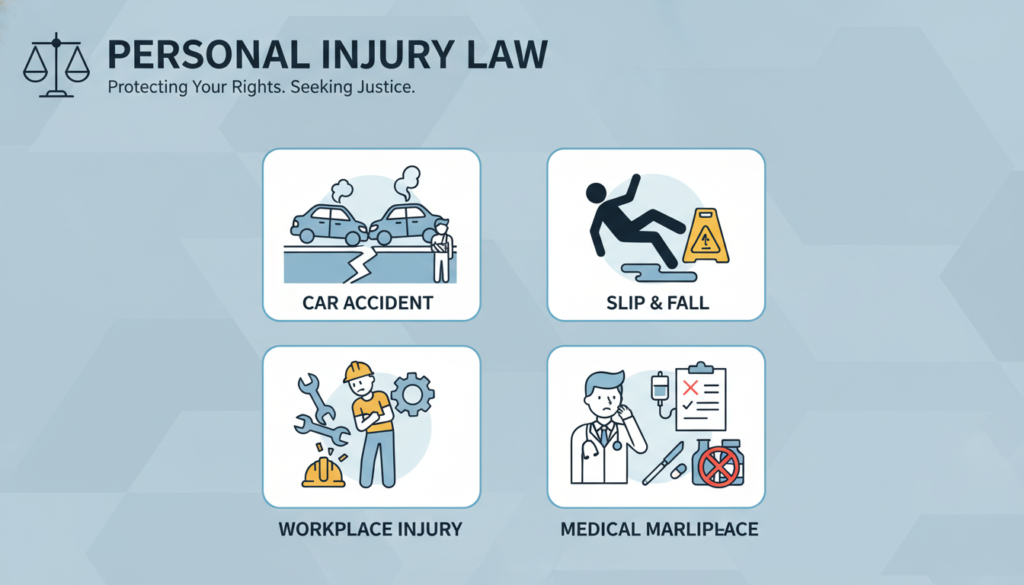
Personal injury law covers many situations where negligence causes harm.
Car Accidents
Car accidents are among the most common personal injury claims. Victims may seek compensation for injuries, vehicle damage, lost wages, and medical treatment.
Common causes include:
- Distracted driving
- Speeding
- Driving under the influence
- Reckless driving
Slip and Fall Accidents
Property owners have a responsibility to maintain safe premises. If someone slips or falls because of unsafe conditions, they may have grounds for a personal injury claim.
Examples include:
- Wet floors
- Broken stairs
- Uneven walkways
- Poor lighting
Medical Malpractice
Medical malpractice occurs when a healthcare provider fails to meet accepted standards of care, resulting in injury to a patient.
Examples include:
- Misdiagnosis
- Surgical errors
- Medication mistakes
- Delayed treatment
Workplace Accidents
Employees injured on the job may qualify for workers’ compensation benefits. In some cases, third-party personal injury claims may also be possible.
Product Liability Manufacturers can be held responsible when defective products cause injuries.
Examples include:
- Faulty electronics
- Unsafe medications
- Defective vehicles
- Dangerous consumer products
What Compensation Can Injury Victims Recover?
Compensation in personal injury cases depends on the circumstances of the accident and the severity of the injuries.
Understanding personal injury compensation is important because different types of damages may be available depending on the circumstances of the case.
| Compensation Type | What It Covers |
| Medical Expenses | Hospital bills, surgeries, medications |
| Lost Wages | Income lost due to inability to work |
| Future Earnings | Reduced earning capacity |
| Pain and Suffering | Physical and emotional distress |
| Property Damage | Vehicle and personal property repairs |

Potential damages may include:
Medical Expenses Victims may recover costs related to:
- Emergency treatment
- Hospital stays
- Surgeries
- Physical therapy
- Prescription medications
Lost Income If injuries prevent a person from working, compensation may cover lost wages and reduced earning capacity.
Property Damage Compensation may also cover damaged vehicles or other personal property affected by the accident.
Steps to Take After a Personal Injury Accident Taking the right steps after an accident can strengthen a future claim.
1. Seek Medical Attention Immediate medical care protects your health and creates documentation of your injuries.
2. Gather Evidence Collect:
- Photos of the accident scene
- Witness information
- Medical records
- Police reports
3. Report the Incident Notify the appropriate parties, such as law enforcement, employers, or property owners.
4. Keep Records Maintain records of expenses, treatment, and communications related to the accident.
5. Consider Legal Advice An attorney can explain your options and help determine whether you have a valid claim.
How Long Do You Have to File a Personal Injury Claim?
Every state has a statute of limitations that determines how long victims have to file a lawsuit.
Deadlines vary depending on:
- State laws
- Type of injury
- Circumstances of the case
Missing the filing deadline can result in losing the right to pursue compensation.
Do You Need a Personal Injury Lawyer?
Not every injury case requires legal representation. However, legal assistance may be helpful when:
- Serious injuries are involved
- Liability is disputed
- Insurance companies deny claims
- Significant compensation is at stake
An experienced attorney can evaluate the case and explain available legal options.
⚖️ Personal Injury Statistics in the United States (2025)
Personal injury claims affect millions of Americans every year. The statistics below highlight the scale and economic impact of injury-related accidents across the United States.
Frequently Asked Questions
What does personal injury law cover?
What is negligence in personal injury law?
How much is a personal injury claim worth?
Can I file a claim without a lawyer?
Conclusion
Personal injury law helps protect individuals who suffer injuries because of another party’s negligence. Understanding how personal injury claims work, the types of compensation available, and the steps to take after an accident can help victims make informed decisions and protect their legal rights.
For official injury prevention information, visit the CDC website .
For additional legal resources and step-by-step guides, visit our Legal Aid Guides section or learn more about our website on the About page.